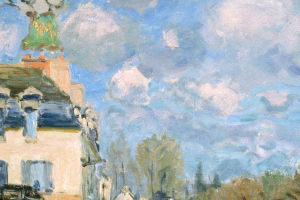
Light is one of the defining features of Impressionist painting. Rather than treating illumination as something that simply reveals a subject, Impressionist painters explored how it could transform color, atmosphere, texture, and perception.
Their goal was often to capture the visual character of a particular moment rather than create a rigidly detailed record of a scene.
Working frequently from direct observation, especially outdoors, they studied how sunlight, clouds, mist, reflections, and changing weather affected their surroundings. The same landscape or everyday setting could appear dramatically different as conditions shifted, making light an essential part of the painting itself.
Light as a Central Element
Impressionist painters gave changing illumination a prominent role in their compositions. Buildings, gardens, waterways, fields, and streets became opportunities to observe how brightness and atmosphere influenced appearance.
Instead of depending on sharp outlines to define every form, they used variations in color, value, and brushwork to establish shape and depth. This approach allowed the painting to communicate the atmosphere of a specific moment while maintaining a sense of visual immediacy.
Color and Reflected Light
Color was fundamental to this approach. Impressionist painters often avoided treating shadows as simply dark areas and instead explored the subtle hues created by reflected light and surrounding surfaces.
A light-colored object outdoors might contain cool or warm tones influenced by the sky, nearby objects, or direct sunlight. By placing different hues close together, painters could suggest illumination and atmosphere without blending every transition into a perfectly smooth surface.
These color relationships also contributed to the distinctive vibrancy associated with Impressionist painting. Individual strokes remained visible while working together to create a unified impression when viewed as a whole.
Brushwork and Visual Movement
Brushwork provided another way to communicate the temporary nature of a scene. Short, broken, and clearly visible strokes could suggest sparkling water, moving foliage, atmospheric haze, or shifting reflections.
Rather than completely concealing the process of painting, artists allowed individual marks to contribute to the finished composition. The resulting surfaces could appear energetic and spontaneous while remaining carefully considered.
Ordinary Scenes Under Changing Conditions
Impressionist painters found rich visual possibilities in everyday surroundings. Gardens, streets, rivers, public spaces, interiors, and other familiar settings offered varied opportunities to study illumination.
Elements such as glass, steam, reflections, and artificial lighting introduced additional challenges. These effects demonstrated how strongly the appearance of a scene depends on its surrounding conditions, not simply on the objects within it.
Capturing a Fleeting Impression
A key strength of Impressionist painting is its ability to convey the temporary quality of visual experience. Light can alter colors, soften edges, create reflections, and change the atmosphere of a familiar place within a short period.
By concentrating on these subtle variations, Impressionist painters developed a visual language that prioritized observation and immediacy. Their work encourages viewers to notice details that can easily be overlooked, from the changing tone of a surface to the way illumination transforms an entire scene.
Impressionist painting gave light an active role in shaping the appearance and mood of a scene. Through carefully observed color, expressive brushwork, atmospheric effects, and attention to changing conditions, painters captured moments that could not remain visually identical for long. This focus on temporary beauty continues to give Impressionist art its distinctive freshness and visual energy.