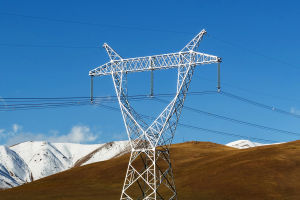
High among rocky slopes and green valleys, electricity pylons create a striking contrast with the natural landscape. For many readers, these tall structures may seem like simple towers placed along a hillside, but their role is much more important.
They support transmission lines that carry electricity across long distances, helping connect different parts of an electricity network even when the terrain is steep, remote, or difficult to cross.
Why Pylons Are Found in Mountains
Electricity is often generated far from the places where it is eventually used. Transmission lines help move that electricity between different areas, and mountain regions can sometimes form part of these routes.
Pylons provide strong, elevated support for electrical conductors. Their height helps keep the conductors at safe distances from the ground, vegetation, roads, and other structures. In mountainous areas, the towers may be positioned across ridges, slopes, and valleys to maintain a practical route between connection points.
The location of each structure is carefully planned. A line that looks almost straight from a distance may actually follow a route chosen to work with the surrounding terrain.
Planning Around Steep Terrain
Building transmission infrastructure on a flat landscape is already a detailed engineering task, but mountains introduce additional challenges. Slopes can be steep, ground conditions can vary significantly, and access to construction sites may be limited.
Engineers need to study the land before determining where foundations can be placed. Factors such as soil characteristics, rock conditions, drainage, slope stability, and the distance between pylons can influence the final design.
Foundation stability is particularly important. A tall pylon needs dependable support, especially in locations exposed to strong winds or changing weather. Careful site preparation helps ensure that each structure remains secure over its working life.
Mountain Weather Adds Challenges
Mountain weather can change quickly, and conditions may be more demanding than in lower areas. Strong winds, heavy rainfall, snow, ice, and temperature changes can all affect transmission equipment depending on the region.
Pylons and their components are designed with expected environmental conditions in mind. The conductors also need appropriate spacing and tension so they can operate safely as weather conditions change.
Maintenance remains important after construction. Inspections can identify damaged components, vegetation concerns, foundation issues, or other conditions that could affect the reliability of the transmission route.
Building Where Roads Are Limited
One of the most difficult parts of constructing pylons in mountainous areas can be simply reaching the site. A location may be far from existing roads or accessible only through narrow and steep routes.
Construction teams must carefully plan how tower sections, tools, and other materials will reach each location. Depending on the landscape, specialized transportation and lifting equipment may be required.
Pylons are commonly assembled from multiple components. Sections can be transported separately and put together at the construction site before the complete structure is erected. Electrical conductors are then installed between the supporting towers.
Protecting the Surrounding Landscape
Mountain areas can contain forests, streams, walking routes, and other natural features that require consideration during infrastructure planning. Choosing a transmission route is therefore not simply about finding the shortest possible path.
Planners can examine different routes to reduce unnecessary disturbance and consider existing access routes where suitable. Construction activities may also be carefully managed to limit the area affected by the work.
Vegetation around transmission lines sometimes needs to be managed to maintain safe clearance. This requires ongoing attention because plants can grow toward electrical conductors over time.
An Important Part of the Grid
For those who enjoy mountain scenery, pylons may appear to be an unusual addition to an otherwise natural view. However, their presence reflects the practical need to move electricity between different locations.
Transmission networks can connect distant generation facilities with communities and businesses. In mountainous regions, pylons make it possible for electrical lines to cross terrain that would otherwise create major obstacles.
The towers also demonstrate how infrastructure is adapted to the landscape. Instead of requiring the terrain to be completely reshaped, engineers can use structures designed to span valleys and follow challenging routes.
Electricity pylons in the mountains are much more than tall metal structures visible from a distance. Their placement involves detailed consideration of terrain, foundations, weather, construction access, safety, and the surrounding environment.
For readers passing through a mountain landscape, a line of pylons can offer an interesting reminder of how electricity travels behind the scenes. Each tower forms one part of a carefully planned network, helping maintain a dependable connection across some of the most challenging terrain.