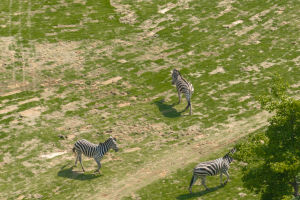
Dust rises in thin clouds as a herd moves across open land, hooves striking the ground in steady rhythm. There's no fence, no fixed path—only direction shaped by instinct and distance.
This is the world of wild horses, animals that have adapted to life in open landscapes with remarkable coordination and resilience.
Life in Constant Motion
Wild horses are not static animals. They travel in groups called bands, moving across large territories in search of food and water. Their daily movement can cover several kilometers depending on season and terrain.
Each band usually consists of a lead stallion, several mares, and younger members. This structure helps maintain cohesion during long migrations and reduces conflict within the group.
Speed Built for Survival
One of their most striking traits is speed. Wild horses are capable of reaching short bursts of high velocity, which helps them escape predators and navigate open environments quickly.
• Strong leg muscles support rapid acceleration
• Flexible joints reduce impact during long runs
• Lightweight skeletal structure improves endurance
This combination allows them to move efficiently across uneven terrain without losing stability.
Communication Without Words
Wild horses rely heavily on body language. Subtle movements communicate intent, mood, and direction within the herd.
• Ear positioning indicates attention or alertness
• Tail movement can signal irritation or relaxation
• Head posture helps establish social hierarchy
These signals reduce the need for vocal interaction and help maintain group coordination even over distance.
Adaptation to Harsh Environments
They are highly adaptable to different climates, from dry plains to colder regions. Their coats adjust seasonally, becoming thicker in colder months and lighter during warmer periods.
Water efficiency is another key adaptation. Wild horses can travel long distances between water sources, relying on both memory and environmental cues to locate them.
Social Bonds and Hierarchy
Social structure plays a major role in herd stability. Leadership is typically held by a dominant stallion, but mares often influence group movement and decision-making.
• Herd cohesion reduces risk during migration
• Young horses learn survival behavior through observation
• Group movement helps protect weaker members
This cooperative structure ensures the survival of the group rather than the individual.
Diet and Grazing Patterns
Wild horses are continuous grazers, feeding on grasses, shrubs, and available vegetation. Their feeding habits influence the landscape, as they naturally help shape plant distribution across open areas.
They often move in patterns that allow grazing areas to recover, preventing overuse of a single location.
Reproduction and Herd Growth
Foals are typically born in warmer seasons when conditions support growth and mobility. Within hours, newborns are able to stand and follow the herd, an essential trait for survival in open environments.
The early bonding between mare and foal is critical, ensuring protection and learning during the first stages of life.
Why They Still Captivate Us
Wild horses represent a balance between strength and sensitivity. Their movements are powerful yet coordinated, their social systems complex yet fluid. They exist in environments that demand awareness, adaptation, and constant motion.
Watching a herd move across open land is not just about speed or beauty—it reflects a system shaped entirely by survival, cooperation, and the freedom of wide, unbounded space.