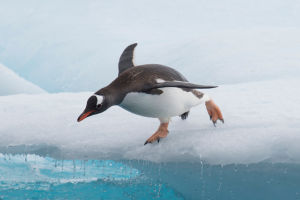
Today we explore a special moment in the life of Adelie penguins. We often see them standing on icebergs near the cold sea. Suddenly, they jump or leap from high ice into the water. This action looks simple, but it shows strength and skill.
The leap from an iceberg is part of their daily life. It helps them enter the ocean quickly to search for food or avoid danger. Together, we can understand why and how they make this bold move.
Where We See Them Leap
We find Adelie penguins along the coast of Antarctica. They live near ice shelves, floating ice, and rocky shores. Icebergs often break away from larger sheets of ice and float on the sea. These floating ice blocks become resting places for them.
We often observe them standing on high ice, looking around before moving. From that height, they scan the water for fish and krill. When the time is right, they jump straight into the cold ocean.
The ice environment plays a key role in their behavior. Icebergs give them a safe spot to rest, dry their feathers, and watch the water for food. At the same time, the sea below provides the resources they need.
Why We See Them Leap
The main reason they leap is survival. They need to enter the water to search for food. Walking slowly down an ice slope takes time. Jumping is faster and more efficient.
We notice that they sometimes slide forward before jumping. This short movement helps them gain balance. Then they push with their strong legs and dive into the sea.
Another reason for the leap is safety. Threats may approach on land. By jumping into deep water quickly, they reduce risk. Water gives them better speed and control than land.
How We Understand Their Body Power
The body of an Adelie penguin is built for swimming and diving. We see its streamlined shape, which reduces resistance in water. Its strong flippers act like wings underwater.
When it jumps from an iceberg, gravity pulls it down. But its muscles control the movement. The impact with water is smooth because its body is adapted to diving. Its feathers also trap air, which helps reduce shock and keeps it warm.
We admire how balance, strength, and timing work together during the leap. It looks playful, but it is actually a precise movement shaped by evolution.
What Happens After the Leap
After jumping into the sea, they start searching for food. We often see them diving deep to catch krill and small fish. They move fast underwater and use their sharp vision to spot food.
Sometimes they swim in groups. Moving in groups can improve feeding success and safety. After feeding, they return to ice or land to rest and care for chicks.
The cycle continues: leap, feed, return, and protect. This rhythm supports their survival in a cold and changing environment.
Why This Behavior Matters to Us
The leap from an iceberg shows how well these birds adapt to extreme conditions. We learn from their behavior that adaptation and efficiency are important for survival.
Their activity also reflects the health of the ocean. If sea ice changes or food becomes scarce, their jumping and feeding patterns may change. By observing them, scientists understand environmental shifts better.
Protecting their habitat helps maintain balance in the ecosystem. Clean oceans and stable ice conditions support their life cycle.
Let Us Protect Their Frozen World
We have explored why Adelie penguins leap from icebergs and how this action supports their life. The jump is not just movement. It is a smart strategy for feeding and safety.
When we see them diving into cold blue water, we see courage and power. Their world depends on healthy ice and clean seas.
Do you feel inspired by their bold leap? Let us care for nature and protect the frozen home where they live. Together, we can help keep their world safe for the future.