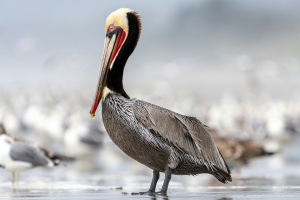
Watching a flock of flamingos wade gracefully through shallow lagoons, it's easy to get lost in their striking pink plumage.
Yet, beneath this elegant display lies a fascinating story of family life—one of careful nest-building, attentive incubation, and devoted chick-rearing that ensures the survival of the next generation.
Understanding Flamingo Nests
1. Mud mound construction
Flamingos are meticulous builders. Using mud, small stones, and other available debris, they sculpt conical mounds that rise above water levels. These mounds help keep eggs from being submerged during rising water. Nest size varies by species and site; some nests can reach about 0.6 meters (2 feet) in height.
2. Nest location choices
Selection of nesting sites is critical. Flamingos prefer isolated lagoons or mudflats, often in colonies of hundreds or thousands. This clustering provides safety in numbers, deterring predators such as large birds and mammals. Shallow water around the nest acts as a natural moat, discouraging terrestrial threats.
3. Egg laying and incubation
Once the nest is complete, the female lays a single chalky-white egg. Both parents share incubation duties, alternating shifts to keep the egg at an optimal temperature. Incubation typically lasts 27 to 31 days, during which constant attention is vital—any prolonged absence can risk the egg's survival.
Chick Development and Care
1. Hatching and early vulnerability
Chicks emerge covered in gray down, lacking the vibrant coloration of adults. In the first few weeks, they are highly vulnerable to environmental threats and must rely on parental protection and the safety of the colony.
2. Feeding practices
Flamingo parents feed chicks a nutrient-rich “crop milk,” a secretion from the lining of their upper digestive tract. This protein- and fat-rich substance is regurgitated directly into the chick's mouth, providing essential nourishment before they can filter-feed independently.
The Cornell Lab of Ornithology (All About Birds) notes: “Adults feed young hatchlings with ‘flamingo milk,’ a special liquid produced in the parents’ digestive tract.”
3. Fledging and learning survival skills
As chicks grow, they learn key behaviors within the colony, including wading and filter-feeding. The nestling period is often listed around 65 to 90 days (timing varies by species and conditions).
Chicks may also gather into large crèches (nursery groups) while parents continue feeding their own young.
Colony Dynamics and Parenting Challenges
1. Social cooperation
Flamingos benefit from the “many eyes” approach. Large colonies allow parents to focus on feeding and caring for chicks while nearby adults alert the group to danger.
2. Environmental hazards
Changing water levels, extreme heat, and storms can threaten nests. Flamingos must continuously repair nests and adjust positions within the colony to optimize chick survival.
3. Learning through observation
Chicks also learn social and foraging skills by watching other families. This communal learning strengthens the entire colony's survival, as knowledge about food sources and predator avoidance spreads quickly among young birds.
Observing flamingos at a nesting colony is a vivid reminder of how survival depends not only on individual skill but also on cooperation, careful planning, and parental devotion. The intricate process of building nests, incubating eggs, and nurturing chicks highlights the delicate balance between nature's challenges and its remarkable adaptability. Next time you spot a flock, take a moment to appreciate the family stories unfolding beneath those graceful wings.